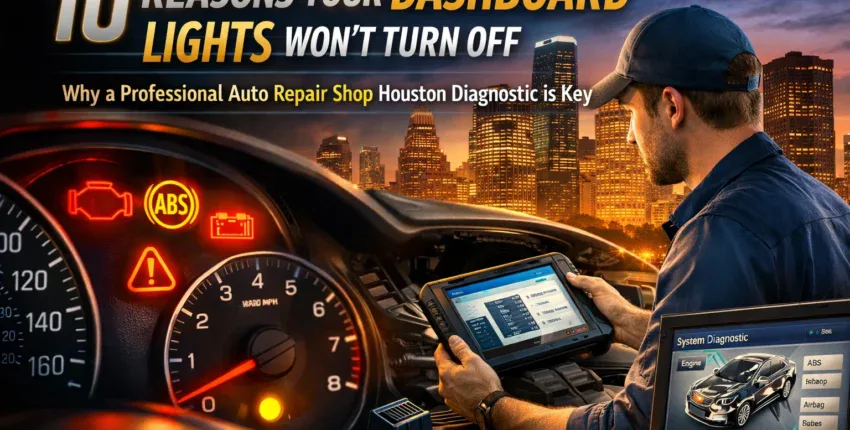
10 Reasons Your Dashboard Lights Won’t Turn Off: Why a Professional Auto Repair Shop Houston Diagnostic is Key

You’ve arrived home after a long day of navigating Houston traffic, you pull into the driveway, turn the key (or push the button), and step out. But as you glance back through the window, something isn’t right. The dashboard is still glowing. Maybe it’s the Check Engine light, the ABS icon, or the entire instrument cluster shining like a Christmas tree in July.

It’s a sinking feeling, isn’t it? Your car is supposed to be “off,” yet it’s still trying to tell you something. At Total Auto Services, we know that a persistent dashboard light is more than just an annoyance: it’s a source of anxiety. Is the battery going to die? Is there a fire hazard? Is my car’s “brain” confused?

Modern vehicles are essentially rolling computers. While that means better fuel efficiency and safety, it also means that when things go sideways, they can get complicated fast. Let’s dive into why those lights might be staying on and why a professional diagnostic and inspection is the only way to get true peace of mind.


1. A Faulty Ignition Switch

Think of your ignition switch as the gatekeeper. When you turn the key to “Off,” the gate should close, cutting power to the engine and the electronic accessories. However, if the internal components of the switch are worn or broken, the gate stays propped open. This allows electricity to keep flowing to the dashboard even when the key is in your pocket. It’s a common culprit that can lead to a dead battery by morning.

2. Electrical Shorts and Wiring Gremlins

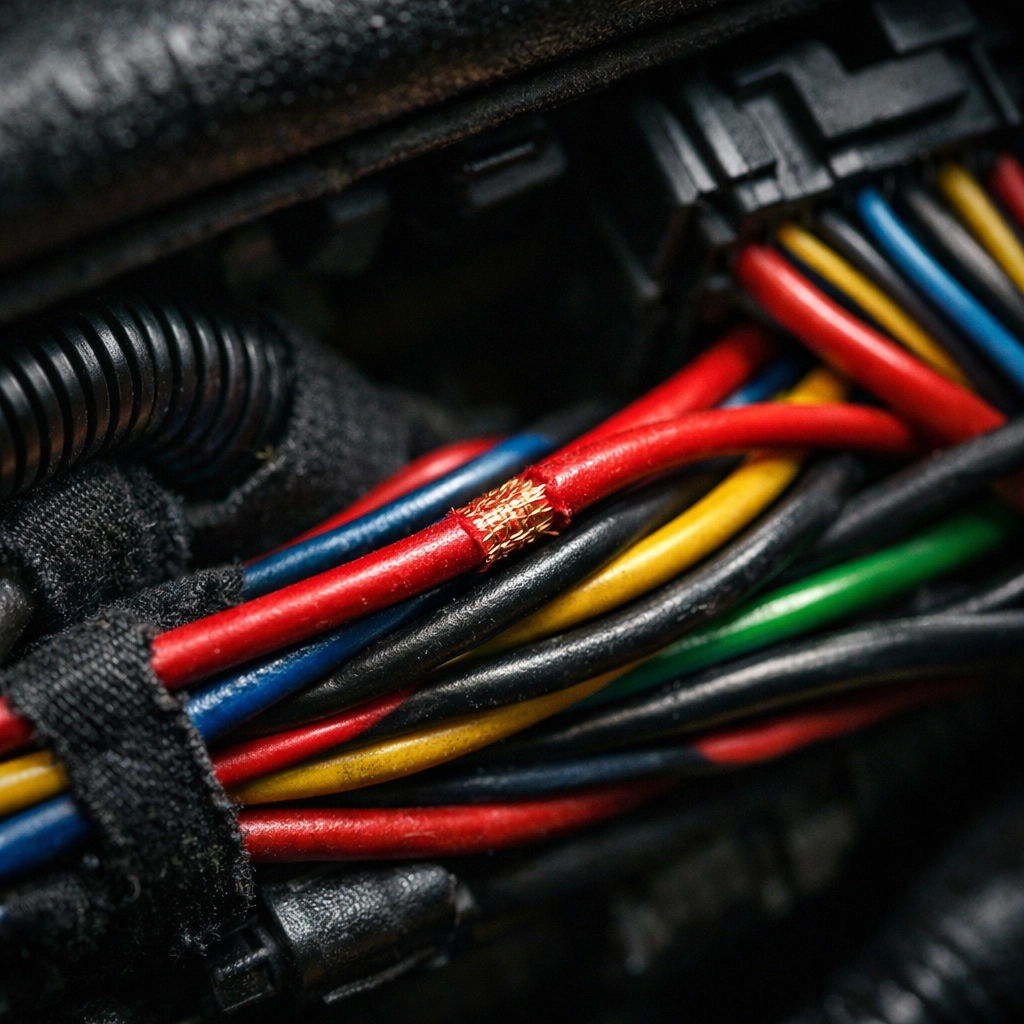
Your car’s wiring is like its nervous system. Over time, heat, vibration, and even the occasional Houston rodent can damage the insulation on these wires. If two wires touch that aren’t supposed to (a “short circuit”), electricity can jump the tracks and power up your dashboard lights unexpectedly. Finding a short is like finding a needle in a haystack, which is why electrical repair and programming requires specialized tools.

Close-up of complex automotive electrical wiring harness with a frayed wire causing a dashboard short circuit.

3. Stuck Relays

Relays are essentially remote-controlled switches. They allow a small current to turn on a much larger current (like the one needed for your headlights or dash display). Sometimes, the internal contacts inside a relay can literally weld themselves together. When this happens, the relay stays “closed,” and the lights stay on regardless of what the computer tells them to do.

4. Body Control Module (BCM) Malfunctions

If the engine is the heart of the car, the Body Control Module (BCM) is the part of the brain that handles “comfort and convenience.” It manages your power windows, interior lights, and: you guessed it: the dashboard display. If the BCM has a software glitch or internal hardware failure, it may “forget” to send the command to shut down the lights.

5. Aftermarket Accessory Interference

We all love a good upgrade, whether it’s a high-end alarm system, a remote starter, or a new stereo. However, if these are incorrectly wired, they can back-feed power into the car’s electrical system. If your lights started acting up shortly after installing a new gadget, the two are likely connected.

6. Corroded or Bad Ground Connections

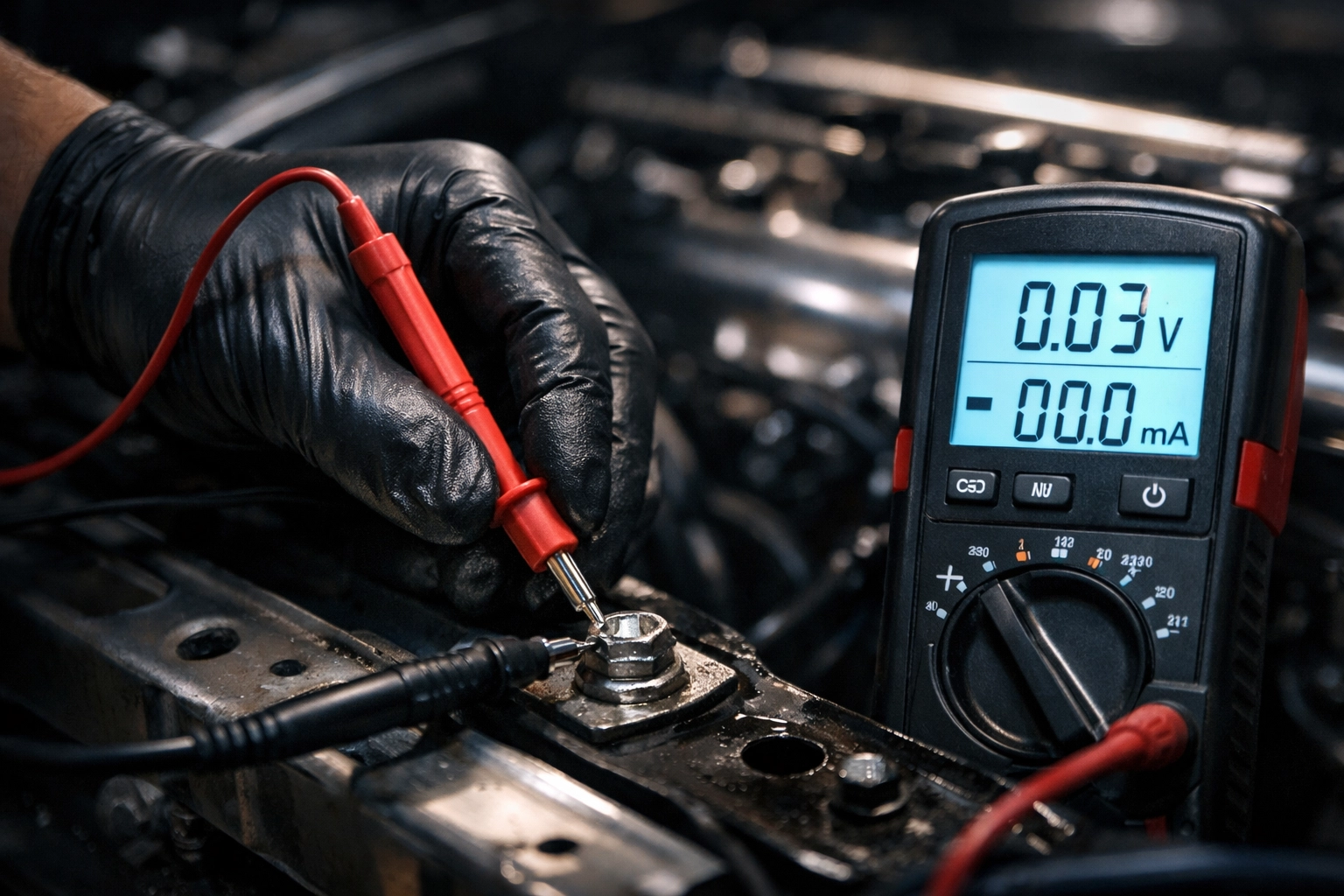
For electricity to flow properly, it needs a clean path back to the battery (the “ground”). If a ground wire is loose or covered in rust, the electricity gets “backed up” and can back-flow through other circuits. This “ghost power” can cause dashboard lights to flicker or stay on dimly even when the car is parked.

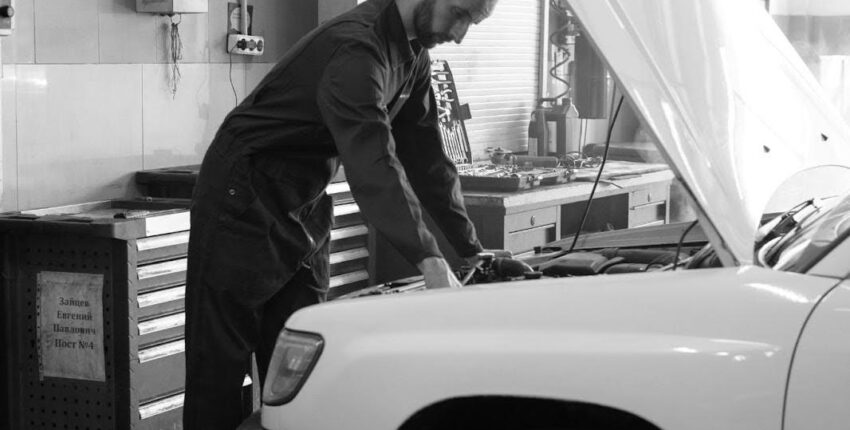
Houston mechanic using a digital multimeter to test electrical ground connections in a car engine bay.

7. Alternator Voltage Spikes

Your alternator’s job is to keep the battery charged and the electronics running while you drive. If the voltage regulator inside the alternator fails, it can send out “spikes” of high-voltage electricity. These surges can temporarily scramble the electronics in your dashboard or even damage sensitive relays, causing them to stick in the “on” position.

8. Failed Headlight or Dimmer Switch

Sometimes the simplest explanation is the right one. Your dashboard lights are often linked to your headlight switch or the interior dimmer dial. If the switch has an internal short, it might keep the “illumination circuit” active even when the switch is physically turned to the off position.

9. Faulty Sensors (The “Warning” That Won’t Quit)

Sometimes the lights stay on because they are trying to warn you about a real problem that hasn’t been cleared. A faulty ABS sensor, a failing Tire Pressure Monitoring System (TPMS) sensor, or a triggered airbag sensor might stay illuminated if the system detects a “hard fault.” In these cases, the light isn’t a glitch: it’s a cry for help.

10. Battery and Charging System Health

When a battery starts to fail, it can cause the car’s computers to act erratically. Low voltage can lead to “phantom” lights on the dash because the modules aren’t receiving enough power to function: or shut down: properly. Regularly scheduled general maintenance can help catch a dying battery before it starts playing tricks on your dashboard.


Why a Professional Houston Diagnostic is Essential

It’s tempting to head to a local auto parts store, grab a cheap code reader, and try to DIY a fix. But here is the reality: A code reader tells you the “what,” not the “why.”

If your dashboard says “Check Engine,” a cheap scanner might give you a code for an Oxygen Sensor. You might spend $100 replacing that sensor, only to find the light stays on because the real problem was a vacuum leak or a frayed wire.

At Total Auto Services, our complete auto repair diagnostics go much deeper. Here’s why a professional touch matters:

We See the Big Picture

We don’t just look at the code; we look at the live data. We can see exactly what the sensors are “thinking” in real-time. This allows us to pinpoint if a module is failing or if it’s just a simple wiring issue.

Specialized Equipment

Modern cars require manufacturer-specific software to “talk” to the BCM and other modules. Our shop is equipped with the same high-level technology found at dealerships, but with the personal, trustworthy service of a local Houston business.

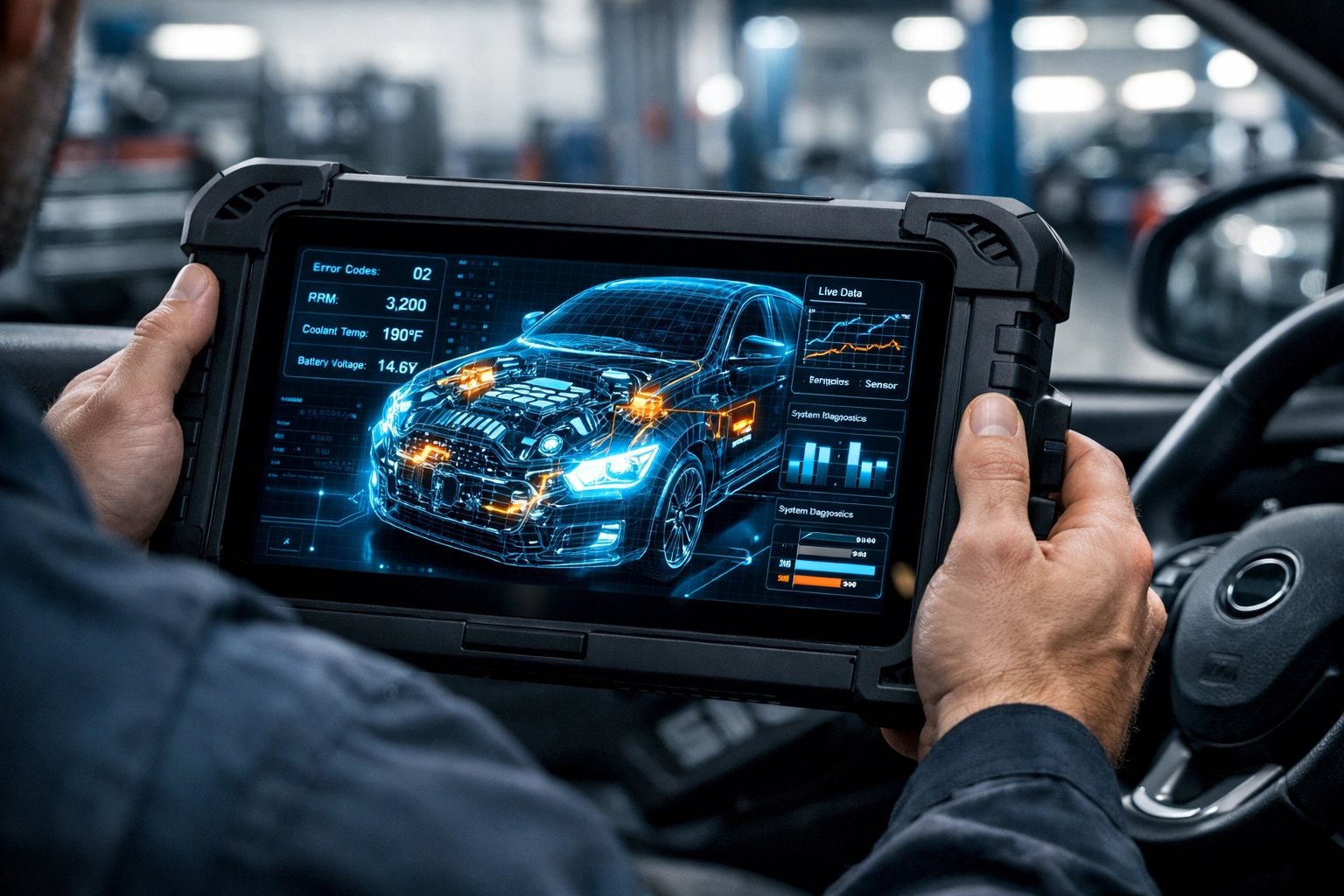
Advanced automotive diagnostic scanner tool pinpointing electronic issues at a Houston auto repair shop.

Prevention Over Replacement

Our goal isn’t just to turn the light off; it’s to ensure your car is safe. A dashboard light that won’t turn off is often a precursor to a car that won’t start. By diagnosing the root cause early, we save you the hassle of being stranded in a parking lot or on the side of the I-10.

Transparency and Trust

We’ve built our reputation at Total Auto Services on being the “Trusted Advisor.” We’ll explain the problem in plain English, show you what’s wrong, and give you a clear path to fix it. No jargon, no hidden fees: just honest automotive repair.


Don’t Let the Lights Dim Your Confidence

Your car is an investment in your freedom and your daily life. When that dashboard stays lit, it’s your car’s way of asking for a check-up. Ignoring it can lead to drained batteries, damaged electronics, or even safety risks like failed brake systems or airbags.

Clear car dashboard with no warning lights providing peace of mind for a Houston driver at dusk.

Imagine the “peace of mind” that comes with knowing your vehicle has been cleared by experts. No more guessing, no more “unplugging the battery” to reset the lights, and no more worrying if your car will start tomorrow morning.

If your dashboard is giving you mixed signals, come see us. We’ve been serving the Houston community with reliable, professional care, and we’re ready to help you get back on the road with confidence.

Ready to dim those lights for good?
Contact us today to schedule your diagnostic appointment, or check out our latest promotions to see how you can save on your next visit.

Engine Diagnostics: What Your Check Engine Light Means

Few things make drivers more uneasy than the glowing check engine light on the dashboard. Whether it flickers briefly or stays solid for days, that small amber warning can spark a lot of anxiety. Does it mean something minor, like a loose gas cap, or is your engine on the verge of a major breakdown?

The truth is, the check engine light is your vehicle’s way of asking for attention. Understanding what it means and how professional engine diagnostics work can help you avoid unnecessary stress and keep your car running smoothly.

At Total Auto Services in Houston, we’ve been helping drivers interpret and resolve engine warning lights since 1984. Our expertise in diagnostics, repairs, and custom upgrades gives you confidence that when that light comes on, you’ve got a trusted team ready to get to the root of the problem.

Why Your Check Engine Light Turns On

Modern vehicles are controlled by advanced onboard computers that monitor performance, emissions, and efficiency. When something doesn’t operate as expected, the system triggers a warning and stores a trouble code in its memory. This is why your check engine light comes on.

The causes can range from minor issues to serious problems, including:

  • Loose or damaged gas cap: This is one of the simplest fixes. A loose cap can cause fuel vapors to escape, triggering the light.
  • Oxygen sensor failure: A bad sensor affects how your engine balances air and fuel, hurting fuel economy and emissions.
  • Catalytic converter problems: If this vital component isn’t working, your car will fail emissions and likely lose power.
  • Ignition or misfire issues: Faulty spark plugs, coils, or injectors can lead to rough running and poor performance.
  • Mass airflow sensor problems: This sensor tracks how much air enters the engine. When it malfunctions, your fuel efficiency drops.
  • Electrical or wiring issues: Modern vehicles depend on complex circuits and modules, and a glitch can cause a warning.

While some of these issues may not seem urgent, ignoring them can lead to costly repairs. A misfire, for example, might start as a rough idle but can cause long-term damage to the catalytic converter if left unchecked.

The Role of Engine Diagnostics

When your light comes on, the next step is to figure out what’s happening. That’s where professional engine diagnostics come in. At Total Auto Services, our technicians use advanced OBD2 scanners and diagnostic equipment to read the error codes and pinpoint the root cause.

What is an OBD2 Scan?

OBD2 (On-Board Diagnostics, second generation) is the standardized system found in all vehicles made after 1996. When we plug in a scanner, it retrieves trouble codes stored in your vehicle’s computer. Each code corresponds to a particular system or component, giving us clues about where the problem lies.

But the scan is just the beginning. A code may tell us there’s a misfire, but it doesn’t automatically reveal why. Is it a worn spark plug, a bad coil, or something more complex in the fuel delivery system? That’s where the skill and experience of a trained technician make all the difference.

Why Professional Diagnostics Matter

It can be tempting to buy a basic scanner and look up the code online. While this might give you a general idea, it rarely tells the full story. Vehicles are far too advanced for guesswork, and parts-swapping based on incomplete information can get expensive fast.

Here’s why professional diagnostics in Houston are worth it:

  • Accuracy: Certified mechanics don’t just read codes; they interpret them. We test related systems, verify data, and confirm the true source of the problem.
  • Time savings: A trained technician can quickly move from symptom to solution, saving you the frustration of trial and error.
  • Preventive insight: Diagnostics often uncover small problems before they become major ones, protecting your wallet in the long run.
  • Advanced tools: At Total Auto Services, we use state-of-the-art scanners, programming tools, and electrical testing equipment that go beyond consumer-grade devices.

This level of precision is especially important for today’s vehicles, where mechanical performance depends heavily on complex electronics.

Common Diagnostic Scenarios

To give you a clearer picture, here are some examples of what diagnostics might reveal when your check engine light comes on:

  • Misfire diagnosis: The system might flag a cylinder misfire. A technician will test spark, fuel delivery, and compression to find the root cause.
  • Evaporative emissions leak: A code might point to a small vapor leak. This could be as simple as a loose gas cap or as complex as a cracked hose.
  • Sensor malfunction: If the oxygen sensor or mass airflow sensor is failing, diagnostics confirm whether the part is bad or if another issue is affecting the reading.
  • Transmission-related codes: Sometimes the check engine light isn’t about the engine at all. Transmission sensors and solenoids can also trigger warnings.
  • Electrical glitches: A failing module, corroded connector, or damaged wiring can throw codes that mimic other problems. Diagnostics help sort fact from confusion.

In every case, the goal is not just to turn the light off, but to correct the underlying problem so your vehicle is safe, reliable, and efficient.

How Ignoring the Light Can Cost You

Some drivers continue driving with the light on, especially if the car seems to run fine. But that decision can backfire. Here’s why ignoring the warning can become expensive:

  • Reduced performance: A misfiring cylinder robs power and fuel economy.
  • Increased emissions: Problems like a faulty catalytic converter or oxygen sensor lead to higher emissions, which may cause inspection failures.
  • Expensive damage: A minor issue, like a failing spark plug, can eventually damage the catalytic converter, costing thousands in repairs.
  • Stranded on the road: What starts as an intermittent warning could escalate to a no-start situation or sudden breakdown.

Your car is designed to give you early warnings. Listening to them protects both your budget and your peace of mind.

How Total Auto Services Can Help

At Total Auto Services in Houston, we’ve built a reputation since 1984 for trusted repairs, advanced diagnostics, and complete auto solutions. When your check engine light comes on, our certified team takes the stress out of the situation with clear answers and dependable service.

Here’s what sets us apart:

  • Full-service care under one roof: From diagnostics and engine repair to suspension upgrades, electrical programming, and routine maintenance, we handle it all.
  • Warranty-backed repairs: Every service comes with a 24-month TechNet warranty on parts and labor, so you can drive with confidence.
  • Fleet-approved expertise: Trusted by Enterprise, Element, and the GSA, we meet the highest standards for both personal and commercial vehicles.
  • Financing options: Through Synchrony, Snap Finance, and other partners, we make it easier to get the repairs you need without the financial strain.
  • Certified professionalism: Our affiliations with TechNet Automotive Service and ADVANCE mean every repair meets strict industry standards.

When you bring your car to us for an engine diagnostic, you’re not just getting a code reading. You’re getting a complete, accurate evaluation backed by decades of experience.

Take Action Before It Gets Worse

The next time your check engine light comes on, don’t let uncertainty or online guesses guide your decisions. A professional diagnostic is the smartest, most cost-effective step you can take to protect your vehicle.

At Total Auto Services in Houston, we’re here to make that process easy. Schedule your engine diagnostics appointment today, and let our trusted team get to the bottom of the issue quickly and accurately. Whether it’s a simple fix or a complex repair, we’ll make sure your car is safe, reliable, and ready for the road ahead.