Quick Answer: Why Do Cars Overheat?
Most cars overheat for one of five reasons: low coolant, a stuck thermostat, radiator blockage or leaks, water pump failure, or a cooling fan problem. If the temperature gauge climbs into the red or you see steam, stop driving immediately and continuing to drive while overheating can cause severe engine damage in minutes.
In Houston’s high heat and stop-and-go traffic, cooling problems can escalate quickly. A professional cooling system inspection and repair helps pinpoint the cause before it turns into a major repair.
Fast Diagnosis: Overheating Symptom vs Likely Cause
Use these patterns to understand what the symptoms usually point to (diagnostics are still required to confirm):
– Overheats only at idle or in traffic: cooling fan, fan relay, sensor, or airflow issue
– Overheats at highway speeds: low coolant, restricted radiator flow, water pump, or circulation restriction
– Overheats quickly after startup: thermostat stuck closed or low coolant
– Heater blows cold while engine is hot: low coolant or trapped air preventing circulation
– Temperature spikes and drops repeatedly: air pockets, thermostat issues, or inconsistent coolant flow
What to Do Immediately If Your Car Starts Overheating
If you notice the gauge rising above normal or a warning light, do the following:
– Turn off the A/C to reduce load on the engine
– Turn the heater on high (it can pull heat away from the engine)
– Pull over safely as soon as possible
– Shut the engine off and let it cool down
– Do not open the radiator cap while the engine is hot
If you’ve had to pull over due to overheating, assume the vehicle needs inspection before it’s driven again.
How Does a Car’s Cooling System Work?
Your cooling system regulates engine temperature by circulating coolant through the engine and radiator. Coolant absorbs heat in the engine, then releases it through the radiator as air passes through the fins. When any component fails, heat builds rapidly, and temperatures exceed safe limits.
Key components include:
– Radiator
– Thermostat
– Water pump
– Cooling fans
– Hoses, clamps, and reservoir/expansion tank
What Causes a Car to Overheat While Driving?
Overheating at highway speeds usually points to a coolant flow problem or a circulation failure. This is often more urgent than an idle-only issue because the engine is under load.
Common causes include:
– Low coolant due to an external leak (hose, radiator, water pump, radiator cap)
– Radiator blockage (internal buildup) reducing heat transfer
– Water pump failure preventing proper circulation
– Collapsed or restricted hose limiting coolant flow
If the car overheats while driving, avoid pushing it to “make it home.” The risk of engine damage increases fast.
Why Does My Car Overheat Only When Idling?
If the car runs hot in traffic but cools down when you’re moving, airflow is often the missing ingredient. At speed, airflow cools the radiator naturally. At idle, the fans must pull air through the radiator to keep temperatures stable.
Common culprits include:
– Cooling fan motor failure
– Faulty fan relay or fuse
– Temperature sensor or control issue
– Electrical faults preventing the fan from engaging at the right time
Can Low Coolant Cause Overheating?
Yes. Low coolant is one of the most common causes of overheating. When coolant level drops, the system cannot absorb and transfer heat effectively, so temperatures climb steadily and may spike under load.
Signs of low coolant include:
– Sweet smell under the hood
– Visible coolant puddles or residue
– Heater blowing cold air while the engine is hot
– Repeated need to top off coolant
Can a Bad Thermostat Cause Overheating?
Yes. The thermostat controls when coolant flows from the engine to the radiator. If it sticks closed, coolant can’t circulate properly and the engine can overheat quickly, sometimes shortly after startup.
Common thermostat-related symptoms:
– Rapid temperature rise after driving a short distance
– Heater performance becomes inconsistent
– Temperature swings (up and down) depending on flow and trapped air
How Can a Radiator Cause Overheating?
Radiators dissipate engine heat. If the radiator is clogged internally, leaking, or blocked externally, it can’t release heat efficiently. This often shows up as overheating during longer drives, under load, or during hot weather.
Radiator-related indicators may include:
– Rust-colored coolant or heavy buildup in the overflow tank
– Visible leaks or wetness around the radiator
– Overheating that worsens over time rather than immediately
What Are Signs of a Failing Water Pump?
The water pump circulates coolant. If it fails, coolant movement becomes weak or stops entirely, and the engine will overheat quickly.
Common signs:
– Coolant leak near the front of the engine
– Whining or grinding noises (bearing issues)
– Overheating that escalates rapidly once it starts
What Happens If the Cooling Fans Don’t Work?
Cooling fans are critical at idle and low speeds. If they don’t engage, the car may run fine on the highway but overheat in traffic.
This can be caused by:
– Fan motor failure
– Relay/fuse failure
– Sensor or wiring issues
– Control module issues in some vehicles
How Is an Overheating Problem Diagnosed?
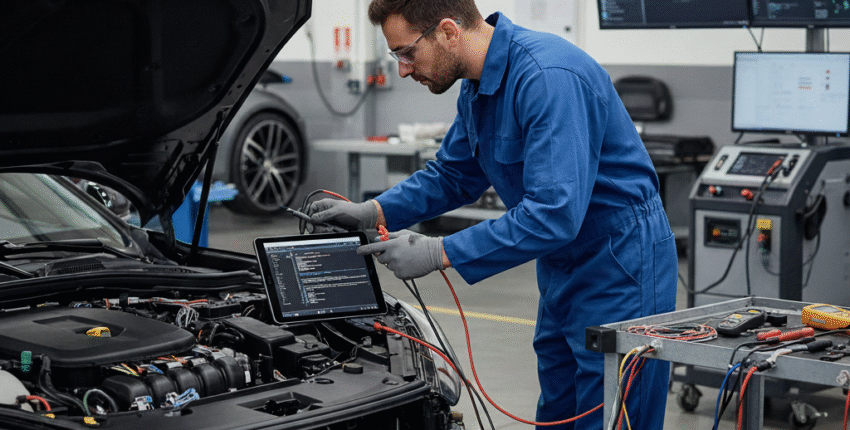
Because symptoms overlap, proper testing is the fastest way to confirm the cause and avoid replacing parts that aren’t failing. A diagnostic process typically includes pressure testing the system for leaks, verifying thermostat operation, checking radiator flow, confirming fan engagement, and evaluating water pump performance.
When overheating repeats or warning lights are present, complete auto repair and diagnostics helps identify the exact failure point so repairs are targeted and reliable.
Why Overheating Problems Can Be Worse in Houston
High ambient temperatures increase baseline engine heat and reduce the margin for error. In Houston, long idle times, heavy traffic, and extended A/C use can push a weak cooling system over the edge. If your vehicle is older, has higher mileage, or has a history of coolant loss, proactive inspection matters even more in hot months.
When Should You Schedule Service?
Schedule an inspection as soon as possible if:
– The temperature gauge rises above normal more than once
– You see steam, smell coolant, or notice leaks
– Coolant level keeps dropping
– The heater blows cold while the engine is hot
– The car overheats in traffic or during longer drives
Frequently Asked Questions About Car Overheating
Is it safe to drive a short distance if my car is overheating?
No. Even short distances can cause permanent engine damage if the gauge is in the red or the warning light is on.
How long does it take for an engine to cool down?
Plan on at least 30 minutes. Never open a hot radiator cap. Allow the system to cool before checking coolant.
Why does my heater blow cold air when my car overheats?
This often indicates low coolant or trapped air preventing proper circulation through the heater core.
Can Houston heat make my car overheat faster?
Yes. High ambient temperatures and heavy traffic increase stress on the cooling system and reduce cooling efficiency.
How much does it cost to fix an overheating car?
It depends on the cause. A leak or thermostat repair is typically far less expensive than engine damage from continued overheating.
Will diagnostics tell me exactly what’s wrong?
Diagnostics can pinpoint leaks, fan operation issues, thermostat behavior, and cooling performance so repairs target the real cause.
Cooling System Repair in Houston
If your vehicle is overheating, the safest move is a cooling system inspection to confirm the cause before engine damage occurs. Total Auto Services works with drivers across Houston to diagnose overheating issues accurately and restore reliable performance.
Schedule your cooling system inspection today to get clear answers and prevent a small issue from turning into a major repair.